Wednesday, 1 March 2017

Walpole

Walpole

I have been very lucky to have been able to travel extensively throughout WA and to this day Walpole takes a special place in my heart. With a 4 and a half hour drive from Perth, Walpole is a small town that certainly bats above its weight when it comes to things for the traveller and angler to do.
For those of us who are old enough to remember the days of driving south through the massive forests with giant trees right next to the road, the last part of the journey into Walpole will feel like a trip to a time long gone. In summer, you can feel the temperature drop as the tree canopy surrounds all with only dappled light making it through. The sort of drive that just put you into the right mood for a relaxing holiday.


Pic. Driving Amongst the Tall Trees

There is also a great number of attraction to keep you busy if relaxing gets too much. The Giant Tingle Tree has been a local attraction for many years. Once used as a jail cell in the early days, many have taken the trip to be able to stand under the hollow at the base of the tree, https://parks.dpaw.wa.gov.au/site/giant-tingle-tree. Access these days is via a boardwalk with seating and a well-maintained path.

Pic. Giant Tingle Tree

Valley of the Giants Tree Top Walk is a must do for any visitor. Being able to stand at the top of the forest canopy and see the view around is an amazing experience. http://valleyofthegiants.com.au/_menus/Attraction/Wilderness_Discovery_Centre.php. While the catwalks do move a little, the view is worth it and is a great place to get some great photos.

Pic. Valley of the Giants Tree Top Walk

Not forgetting the kids, the Bird and Reptile Park is a great place for the kids to get hands on and feed the birds as well as seeing the dinosaur skeletons on display as well as the reptile enclosures, http://dinosaurworld.com.au/.

Pic. Kids Get to Feed the Hand Reared Birds

A little closer to Denmark there is also the Toffee Factory ( http://www.jjstoffee.com/) and the Bartholomews Meadery ( http://www.honeywine.com.au/)  with the best honey and honey icecream I’ve ever had.

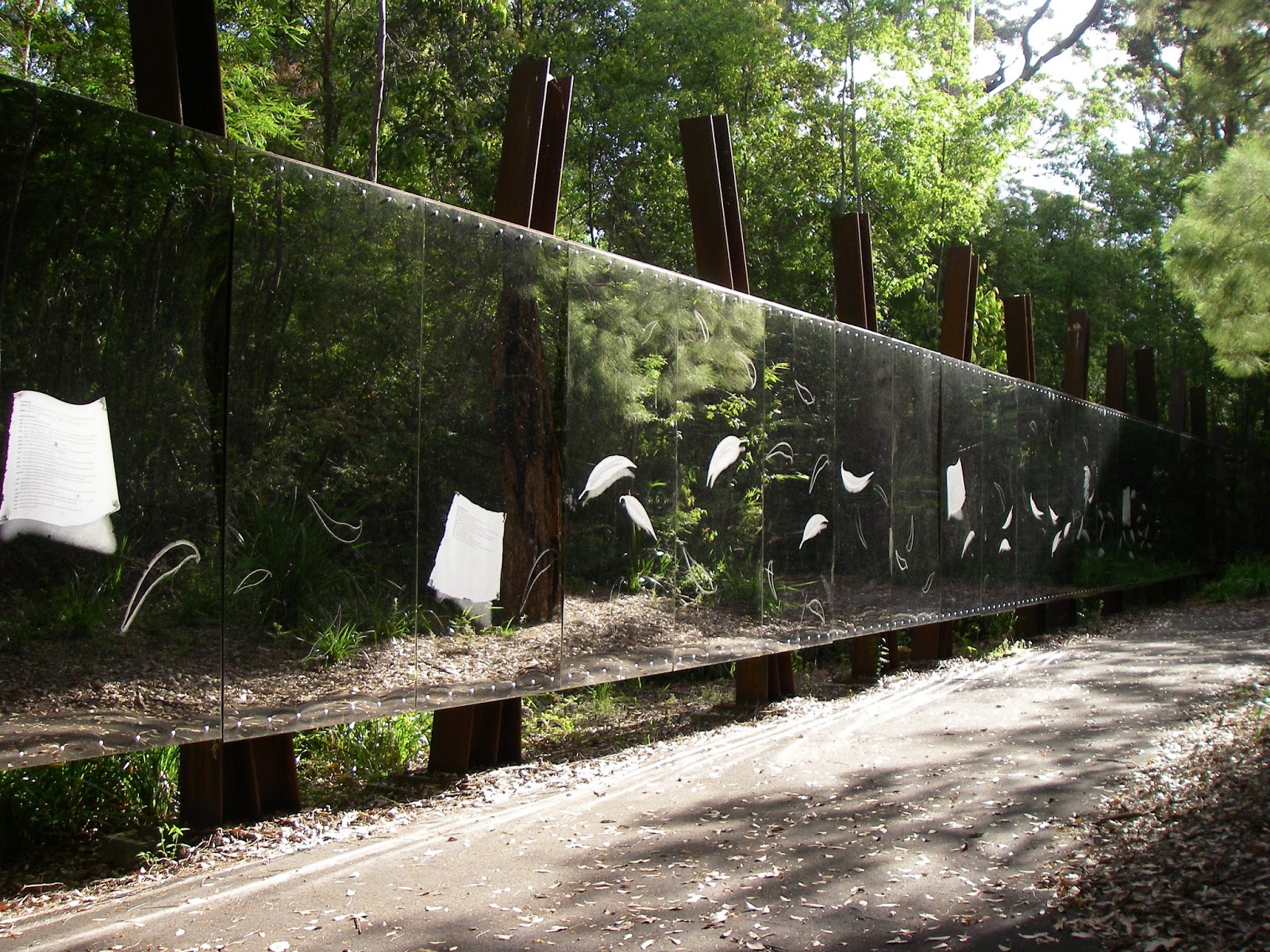
For something a little different, take the drive out to Swarbrick (https://parks.dpaw.wa.gov.au/sites/default/files/downloads/parks/swarbrick.pdf). The biggest mirrored wall I’ve ever seen reflects the light and surrounding bush to start this amazing attraction. The walk through is not something you’d expect to see, but well worth the effort and only a short drive from town.

Pic. Mirrored Wall at Swarbrick

In addition to all this there are wineries, cheese factories, bakery, a great pub with some of the coldest beer I have enjoyed and much, much more.

To top all this off, Walpole is one of my favourite estuarine systems in southern WA. Comprising both the Walpole and Nornalup Inlets with the Deep, Frankland and Walpole rivers you have a lot of options when it comes to fishing exploits. The Walpole Inlet can be a shallow system to navigate at times, while the bigger Nornalup Inlet is a deeper system with plenty of structure around like Snake Island, the rocky beach and walls near Coalmine Beach and the channels and rock walls near the mouth of the Nornalup Inlet as to travels out into the ocean. The water here is amazing at times and can be crystal clear, allowing you to see fish, reef and many other aquatic visitors.

Pic. Nornalup Inlet Pelicans

As with the Walpole Inlet, the Walpole and Deep rivers can be shallow in sections, but if you take your time there are a few deeper holes well worth a shot. Expect to be frustrated at times as we’ve had large schools of bream literally surround the boat and not touch anything offered.
The Frankland river is the largest of the 3 and holds good numbers of bream, whiting, skippy as well as crabs and giant herring at certain times of the year. It’s worth traversing the upper reaches of the Frankland to be back in amongst the giant trees that reach right down into the water in sections. Always keep an eye out for submerged logs and, as always, please obey the speed and catch limits.

Pic. Cruising the Frankland River

Pic. Frankland River Views

Pic. Giant Herring From the Frankland River Bridge

Pic. Frankland River Black Bream

In the Inlets you can expect to come across flathead, skippy, herring, bream, tailor, the occasional snapper, whiting (yellowfin and KG), crabs, giant herring, salmon and much more. Keep on the move to find the fish, they won’t always come to you, but if you like to berley up then try the new shredded mulie blocks and tubes.

Pic. Inlet skippy Can Get to 4kg Plus

Pic. Black Bream Appear Almost White in the Clean Water

Pic. On the Flats, Anything Can Attract Fish, Even a Marker

Pic. Plump Inlet Whiting

Pic. Bream Almost Ready for the Net

As always, please stay safe and keep an eye on the weather. This systems is prone to wind chop and it can get very rough making the crossing of the Nornalup Inlet in small craft rough and potentially dangerous. All that aside, there are plenty of places to stay on offer and we haven’t even made it to the beach or offshore fishing yet.

Happy travels and more soon.

Saturday, 11 February 2017

Bunbury’s Harbour Delight

Bunbury’s Harbour Delight

This is a little look back at one location I have enjoyed immensely over the years.


A hand full of burley thrown out the back of the boat. Strategically placed to drift back past the boat just as the boil begins. What to use this time? I know, spinner bait. 'Spinner Bait?', comes a querying voice from the back of the boat. 'Why not', is my response. That’s the beauty of fishing. Trying something new each time I hit the water. Looking for that lure with a difference that will turn a quiet day into a day to remember.

That’s what I’ve been doing with the usual suspects in Bunbury Harbour over the past few months and it’s been a real eye opener. The number of times I’ve driven down to Bunbury and looked longingly out of the Harbour wondering just what was sitting out there. In particular, the old jetty that sits at the boundary of the Outer Harbour and Koombana Bay. This was going to be the first target in our exploration.

The first time you fish the old jetty it’s more of a question on where to start than anything else. The place is full of structure the growth on some of the pylons is amazing. The next question was what to throw? I’ve been a real chicken when it comes to bait, so back out again with the plastics and on with the trusty Bass Minnow rigged on a 1\16th Enviro Jig with 4lb Fluro Green Fireline and a 4-6lb Fluorocarbon Leader. The jigs are a locally made product made out of a tin based mix. The beauty of these jigs is that they retain their shine even after hours of use. This is great for species like Herring who are attracted to a bit of shine in the water. The Minnows imitate baitfish really well and have accounted for a lot of Skippy, Herring and other species over the past few years in similar structure.

We avoided using any burley to start with. We were really keen to see what hung around without having to be enticed. Our choice to start the day was to hit the areas that had the sleepers removed from the base of the bay. This at least made it easier to get right up under most of the jetty and into the danger zone, if we had anything big hit here, it was going to be a lot of fun to get it out. One thing to be aware of here is that the jetty can act as a huge windbreak. Rather than fight the breeze, fish on the side opposite to the wind direction. Whether you’re anchored up or using an electric motor like we were, it’s going to make your life a lot easier and will also make it easier if you’re going to be throwing plastics.


Within a few casts we were onto Herring. It was pretty easy to spot the hit. A good cast under the jetty and let the jig slowly sink. If the Herring were really on the bite, then more often than not, the line would be heading off horizontally within a metre or so. If that started to happen, then it was easy to take up the slack and set the hook.

The Fireline we use really works with us well in this style of fishing. The Fluro Green colour makes it easier to see the line when it’s on and in the water. This is how we were able to easily see the line move if a fish hit the plastic. The other advantage it gives us is that we can feel the fish bite a lot more effectively than most mono lines. What this means is that we can feel a lot finer hit from a fish and can strike with greater effect. It really does increase your catch rate.


Once the Herring really get on the bite it can be mayhem. At times we had 3 way hook-ups right under the jetty. The occasional bust off was always going to happen on bigger Herring and really couldn’t be avoided, but to see the Herring come out and followed by big schools was really a buzz. You could literally see the watercolour change as the schools rose.

Once we cracked the Herring, it was time to move on and try a few different ideas. The first was to change to a heavier head, 1\8th, and see if we could sink down quick enough to get through the Herring. Even though the odd Herring still beat us too it, this was a much better prospect to get down to some different species. The first cab off the rank was a few Skippy. While not big fish, most were size or over and really were a lot of fun on the light gear. These can be a little harder to catch and will often hit a plastic 3 or 4 times before you get a good hook-up. A good tip is to let your plastic sit if you drop a fish. A lot of times the Skippy will have a few mates following and these don’t mind having a go either. It can also help if you twitch your plastic, a lot of times you can twitch as a fish hits and then you’re on.

By twitching, we mean you use short, sharp movements on your rod tip to move your plastic along. A lot of anglers use this method when lure fishing for a lot of species using plastics and hard body lures.

Once the Skippy started to go off the bite a bit, we changed plastics around a bit until we cracked a pattern that had them on the bite again. Really, if you don’t get a hit within 5 minutes or so, then change and see how it goes. Don’t simply change colour in the same range either, a lot of time what is needed is a changed in action to get the fish going again. One that really surprised us was the Ecogear Mini Squid. These have a wicked action and are a very different plastic. Instead of having the standard tail setup, as most plastics do, these have a group of plastics strands at the end with a soft membrane along the side of the main body that really moves well in the water. The effect is so natural and the fish just couldn’t resist.


2 species down, what else could we find hiding in this amazing structure? Again, a slight change in tactic was to prove a big factor. To get the plastic down quicker, we switched to a lead head jig. The Nitro Bream Bullets have proved their worth here. We were in around 5-8m of water, so a quicker sink rate was going to help as we looked for more bottom dwelling species. Within a few casts we were into it again. A few Skippy started to join in again, but we also managed to land our third species, Flathead. A real fave of mine, it was great to just how diverse the species were here.


The next fish really had me fighting to guess what it was. A quick, hard thud on the plastic and it felt like I had caught a boot. This one wasn’t coming up without a fight and on 1-3kg gear, it was making life hard for me. Once I finally had it off the bottom, it went for a good 20m surge that had me panicking. Once back in the pylons, I was toast. Strangely enough, this one just ran along in front, finished it’s burst and slowly come to the top. First sight has me thinking it was my first Leather Jacket on plastics, but once on the boat I was a little confused. This was a first for me and while it looked like a Leather Jacket, it had a very hard shell around the body and very little flesh you could feel. A little investigation later on identified it as a Box Fish, related to Leather Jackets. Not one for the Live Well, but it was a buzz to catch something I hadn’t seen before. While this one was fairly plain in colour, we did manage one with amazing colours later on.


What really made our day was to see the Dolphins come around and show more than just a little interest. Any fish that was thrown back was a quick meal if it wasn’t placed in exactly the right spot. I’m not an advocate for feeding wild Dolphins, but these guys were pretty quick off the mark. Even when it came to landing a fish, any mates it had were also quickly turned into a meal. One more than one occasion they would come alongside and check us out or put on a bit of a show.


Lastly, we gave the bait a go. Using a standard 2 hook rig, sinker on the bottom, we started off with prawn to see if there was anything lurking that wasn’t interested in our plastics. To our surprise, just about every drop turned up a double hit of juvenile Pink Snapper. The real concern we had was that these were very much undersize fish which were more than a little hungry. Not wanting to damage Pinkies of this age we abandoned the bait and turned our eye Westwards. Still, in the back of our mind we had thoughts of finding their big brothers.

With our confidence up after a few sessions at the Old Jetty, our attention turned to the areas off the beach along Koombana Bay. We’d had our eye on it a few times as there were some good reports of crabs from a few of the locals and on a number of spots we could see crays pot floats, which meant some structure had to be around. Our partner in crime, Pie Smuggler, had fished the area a bit 10 years or so before and had some success on King George Whiting so our expectations were high. Our first stop was the area closest to the cut as you could out to the harbour fro our launching spot at Eaton. We were pretty disappointed to be met by hoards of Blowies that turned our plastics to mush and made a quick meal of our bait.

Our only real option was to keep moving West along parallel to the beach and hope that we eventually found somewhere the Blowies weren’t. To our amazement, once we were about a kilometre from the Cut entrance, the Blowies stopped. So we started to look around a bit more with some confidence. Our first target was some of the structure around where the cray pots had been set. Using the sounder we managed to find some good structure and even some schools of fish. This time we anchored up, mainly to avoid drifting too close to surrounding pots.


Tuesday, 17 January 2017

Squirmy Bream Wormy


Sorry about the lack of vids, but I've just uploaded my first squirmy wormy fly. I've had a few guys test the Squirmy Bream Wormy with good results on bream and whiting. The one thing I like about the fly and material is that you can play with different weights and worm lengths and change the buoyancy of the fly, even to the point of getting it to suspend and float. This opens up all sorts of opportunities. Enjoy.

Wednesday, 12 October 2016

Bream Candy - Fly Tying Video


Apologies for the time between posts, things have been pretty crazy here. Just finished my latest fly tying video and this pattern is a great one for the flats and can be fishing in snags by weighting the fly using wire around the hook shank. Enjoy.

Friday, 23 September 2016

Interesting Read - mono vs fluro

Interesting read:

https://activeanglingnz.com/2016/01/04/the-fluorocarbon-myth/

Friday, 9 September 2016

Blackwood

Blackwood Dreamin’


Late Afternoon on the Blackwood – Paradise Found

It has that effect on you. Drifting down the bank, casting into the snags as the breeze and current do the hard work for you. The mirror finish reflects the trees and sky giving and almost surreal vision.

How many of us really take the time to have a good look around us when we’re on the water? To soak up the sights and sounds and really appreciate what we have right at our doorstep. Some times it’s not just about the fishing, it’s about taking time to relieve the stresses of the week share it with a good mate or just enjoy it on your own.

It’s right on our doorstep, and yet how many of us really know much about the Blackwood River? It’s been in the news for all the wrong reasons, as the pursuit for Recreational fishing rights, fish stocks and commercial fishing sees a battle waged on all fronts.

To be honest, it’s a snapshot of what has been brewing in this state for the last few years. As the positive influence of Catch and Release fishing from the print media and WABREAM Tournaments spreads, people have started to have a good look at what we do to our rivers and not just the fish. All that aside, but not forgotten, we have really just began to appreciate the true potential that has been enjoyed by a lucky few for so many years.

OK, so I’m a little biased when it comes to the Blackwood and my passion for Black Bream has me coming back to this river often, but what is it really that just keeps us coming back.  Well, for starters. How many rivers in the south of WA give sooo much room to move and bank to fish? The Blackwood is one of our few big southern rivers, extending from the mouth near Augusta right through to the trickles around Balingup and Nannup. Its sides are surrounded by towering trees which not only provide some great protection to the angler from strong winds and the unpredictable rain, but also occasionally falls victim to the elements and comes crashing down the banks to become part of the river system itself.


It’s also a system that gives us corner after corner to explore. Trust me when I say you can spend countless days going from snag to snag and have all your ideas spin around as the weather changes or you find yet another nook.

And hey, from just a guy’s point of view, the ski area can be a lot of fun :-)


For those of you who love to pursue a Blackie or 2, then this is a great spot that is still within easy travel distance from Perth. The choices are pretty easy as far as accommodation. I’d avoid the town unless you want to travel across the estuary every morning. Best bet is to either tent it at Alexandra Bridge or spend a few more dollars and get a camp site at Molloy Caravan Park or spend a bit more and live in luxury in one of the cabins. We managed to spend a few nights at Molloy recently and the facilities are excellent. The extra dollars for the cabin meant less hassle as far as the sleeping arrangements went and the ramp is one of the best Park ramps I’ve had the pleasure to use. It also makes a great backdrop for a few pics before release.


A Couple of Blackwood Beasts, the Grassed area at Molloy Makes is Easy to Move Around

Woops, aren’t these beasts just a tease. Sorry, couldn’t resist, but this is why we keep coming back. Bream like this aren’t just for the pros, but can be caught by anyone who puts in the hard yards and thinks about how they fish.

For the hard body Breamer, this really is heaven. The deep banks mean you really do need to get close to the bank and think about lure selection. As a bit of a HB nut myself, I take 2 approaches to the Blackwood. The first is to get right down amongst them. This means a deep diving lure that is going to go to 3m plus and quickly. Two of the best of these for me are the Taylor Made Tiny Nugget and the Salmo Hornet. Unlike a lot of other anglers I’ve fished with, I’ve actually found that brighter lures like Chrome Gold or Fluro Orange work the best as we head into the clearer waters of the warmer months.

The key…… slow and steady. A great way to get the lure down quickly is to actually twitch\rip the lure a few times to start with. This is where a rod that is stiffer in the tip is going to help. The less give, the quicker you’re going to part action onto the lure and get it down. Once it’s down to a reasonable depth, a slow retrieve with small pauses is the way to go. The easiest way to impart a pause onto a lure is to nod the rod.

What we mean by this is to lower and raise the rod or move the rod away and then back towards the body while still retrieving the lure. The idea is that as the rod moves with the retrieve, the lure literally pauses its movement. This pause will often be enough for a Bream to strike. The next few seconds here can be joy or sheer frustration to a lure fisherman. The first thing many a snag fish will want to do is head straight back into the cover. The temptation here is to pull like there is no tomorrow and more often than not, rip the hooks. In many cases, a little line will be enough to get the Bream to have a small run, yet still be able to turn it. On some occasions though, they will be straight back in there and then it’s panic stations. Again, give the fish some line and then gently play the fish out of the snag. DON’T keep pulling the fish up and down to get it out, you will often be able to feel the line rubbing on the timber and that is when it gets tricky. Giving the Bream some line often calms the fish, as it’s not constantly struggling. Then we can tease the fish out slowly but surely. You’d be surprised how many times you can do this and have the leader chaffed to pieces. A good thing to remember here is that good leader material is worth its weight in gold and can mean the difference between grief and a possible PB. My choice here is the Yamatoyo Fluorocarbon leader and for the Blackwood we usually fish around 6-8lb.


While the deeper regions are often a better source for larger fish, don’t discount the shallower regions either. While not abound with larger specimens, there can be a LOT of smaller fish ready to give you a bit of fun. For me, this is the domain for the twitchers. I just love using smaller lures like Yo-Zuri Snap Shads or Eddy’s Lip Rippas and twitching them ready to be slammed.

There is something about our southern Bream that just seems to make them meaner and even a 27-32cm fish will give a good account of itself. Again, a more responsive rod like the Black Diamond Sniper or Hardback are ideal rods.


Author with one of a Bag of 15 fish, all Caught Twitching

For plastics Breamers, this really is the ultimate in scary fishing. If the plethora of trees, rocks and other hazards don’t get you, then there’s a good chance Mr. Bream will have a good try any way. It’s a great way to learn how to fish plastics better as you watch the line for signs of a hit and learn to gauge the depth of a region and when to lift the plastic.

One of the big plusses in this area is the use of a brightly coloured main line like the fluro yellow Fireline. Even in bright conditions, you can see the line move when a fish hits. A good pair of polarising sun glasses is also an advantage here.

The beauty of plastics is that they can be fish in an incredible variety of ways. Something we just can’t achieve with HB lures without an very good collection. Still, we tackle rats never need much of an excuse. We can also use an incredible number of sizes and colours without even having to change the jig head. Lately the belief has been bigger plastics mean bigger Bream, and to that extent, plastics like the Berkley 3” Bass Minnow and the 3” Eyeball Tail have been a popular choice and a real winner.


30cm Bream Caught on a Pearl\Watermelon Bass Minnow on a 1\16th EnviroJig Head

Jig head selection is also critical as some really do like the timber more than others. Lately I’ve been fishing the new EnviroJigs, made locally here in WA. They are a lead free jig which fish like no other I’ve used. They actually fish light for their weight, which means you can keep I tin the zone for longer. Don’t feel as though you must use a heavy head for deeper water though. As said, keep it in the zone for longer as you just never know what may be lurking on the way down. You’ll be surprised how many Bream are picked up on the drop. For most occasions, that means 1\16th at the most unless the current is ripping.

It’s going to be a bit hit and miss to start with as you get used to fishing the deep snags, but the key is persistence and be willing to learn. Places like the Blackwood do often have a good current so for something different, cast the jig a little further out so it drifts back to the snag as it sinks. This is a great way to get to those fish sitting in deeper water and also allows you to get right under a log instead of just down the side of it.

Another lesser know structure is the shady tree. The banks of the Blackwood are lined with hundreds of Peppermint trees in sections, and under these tress lurk Bream seeking shelter from the bright sun.


While it’s not easy to cast straight under these trees, there is a method that comes in very handy. Skipping is the act of casting a plastic so that it skips along the surface of the water, very much like skipping stones. The idea here is to cast using a sideways flick, holding the rod down low with your arm in a similar position you would have it if you were skipping stones. A bit of practise and you’ll have a deadly weapon that also a great way to get in under jetties on the Swan.

Another very overlooked structure for the plastics Breamer is the scrubby shoreline back down near Molloy Island itself. Bream often lurk in along the edges, feeling on the moss growing on the exposed roots of the trees, the mussels that grow on them or the small bait fish that swim in amongst them as well. The beauty here is that a plastics can get right beside the snags, whereas a HB lure tends to miss the zone as it is retrieved out from the snag before it’s at the right depth. In the recent WABREAM State Invitational, this area was very productive for many anglers. One frustration here though is that many of the smaller fish tend to inhabit these zones and can be an annoying distraction as you look for better quality.

In the end, it’s the deeper water where the reward is. There is just nothing quite like the feel of a kilo plus fish doing its best to stitch you up. And the reward for your patience is all worth it.


Willo with a PB 1.24kg Bream Taken on a 1\16th Nitro Head Using a Bass Minnow.


Oh, and the by-catch isn’t too bad either. Monster yellow fin whiting, herring, tailor and the occasional mulloway, but that’s for another session. ‘Til then, may your leaders hold and you hooks stay true.

Tuesday, 6 September 2016

Whiting Gurgler - fly tying video

Hey everyone, with the whiting season fast coming upon us I've added the video for my Whiting Gurgler recipe to my YouTube channel. Check it out, looking forward to getting these wet soon.